
- Labeled for conception: Pre-Seed, Good Clean Love Regenesis and Lubelife Fertility.
- The FDA has a specific product code (PEB) for gamete-, fertilization- and embryo-compatible lubricants.
- Lab studies show some lubricants reduce sperm motility, but a large real-world cohort found no link to slower time to pregnancy.
- Talk to a clinician if you have been trying for a while.
If you are trying to conceive, a regular lubricant may not be the best choice, and a fertility-friendly lube is worth a look. Some lab studies show certain products can reduce sperm motility. At the same time, a large cohort study found lubricant use was not linked to a longer time to pregnancy, so the picture is mixed.
The FDA recognizes a special category for products compatible with sperm, eggs and embryos. So, does lube kill sperm? Not necessarily, but results vary by product, which is why this list only includes products labeled as fertility-friendly or sperm-friendly lubricant options for conception and TTC. Browse the full fertility-friendly category.
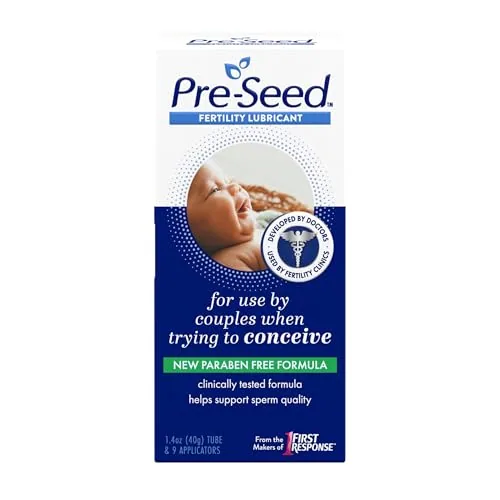
Pre-Seed Fertility Lubricant, 9 Applicators
Pre-Seed is the best-known fertility lubricant. Its listing says it is isotonic, pH balanced to resemble the vaginal environment, developed by doctors and used by fertility clinics. In an in vitro study, it preserved sperm motility and vitality best.
- Isotonic and pH balanced
- Highest motility (86%) in one lab study
- Applicators included
- The lab data are in vitro, not pregnancy outcomes
- Not stated as condom or toy safe
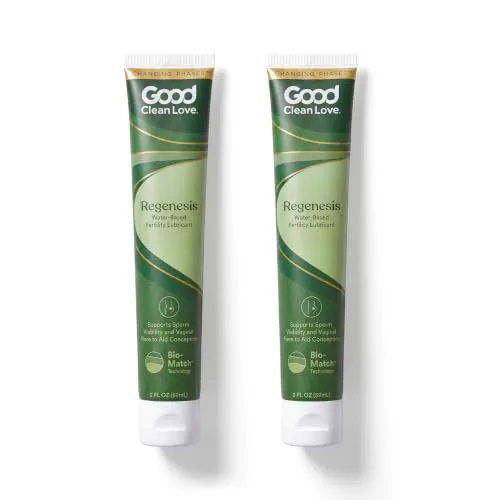
Good Clean Love Regenesis Fertility Lube, 2 oz (2-pack)
Good Clean Love Regenesis is a water-based fertility lubricant with calcium and magnesium ions. The maker says it does not decrease sperm motility and is safe with toys and latex condoms.
- Water-based, glycerin- and paraben-free
- Calcium and magnesium ions
- Toy safe
- Fertility claims are the maker's own
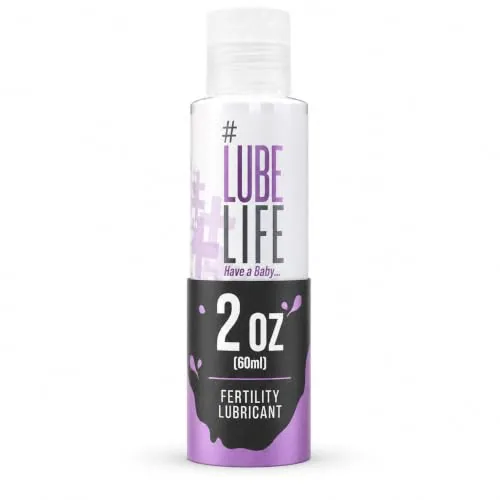
LubeLife Water Based Fertility Lube, 2 fl oz
Lubelife Fertility is a vegan, water-based, sperm-friendly lube free of parabens, glycerin, sulfates and fragrance. The 2 oz size travels easily and rinses off with water.
- Glycerin- and paraben-free
- Compact size
- Vegan
- No clinical claims beyond 'designed to support motility'
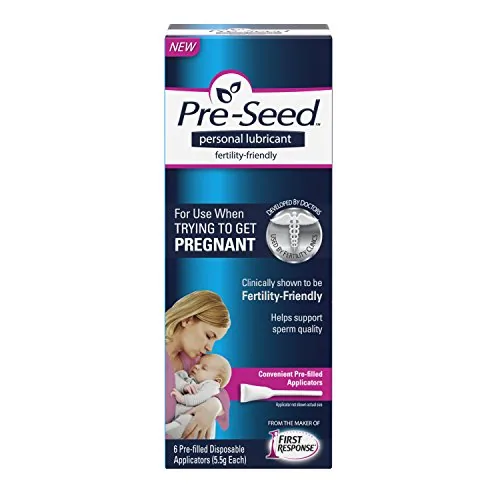
Pre-Seed Fertility-Friendly Lube Applicators
The same Pre-Seed fertility-friendly formula in single-use, pre-filled applicators, which makes it easy to apply inside the vagina shortly before intimacy and convenient for travel.
- Pre-measured, single-use doses
- Same formula as the Pre-Seed tube
- Discreet to pack
- More packaging than a tube
- Costs more per use than the multi-use tube
How we chose
We ranked products labeled for conception first, then included lower-risk alternatives and said clearly where there is no fertility claim.
- Fertility labeling: products whose listings say they are for couples trying to conceive come first.
- Osmolality context: WHO's ideal is 380 mOsm/kg or less; vaginal fluid measures roughly 260-290.
- No fertility claim: labeled in the award so you are never misled.
- One formula each: we did not repeat the Pre-Seed applicator version separately.
Fertility-friendly lubes compared
Dashes mean the listing does not specify.
| Pick | Base | Condom-safe | Toy-safe | Glycerin-free | Best for |
|---|---|---|---|---|---|
| Pre-Seed | Not stated | — | — | — | Couples trying to conceive |
| Good Clean Love Regenesis | Water | ✓ Yes | ✓ Yes | ✓ Yes | Natural-minded couples |
| Lubelife Fertility | Water | ✓ Yes | ✓ Yes | ✓ Yes | Travel-friendly trying to conceive |
| Sliquid Organics | Water (aloe) | ✓ Yes | — | ✓ Yes | Gentle alternative |
| Good Clean Love Almost Naked | Water (aloe) | ✓ Yes | ✓ Yes | — | Organic preference |
| Uberlube | Silicone | — | — | — | Lasting comfort |
Does lube affect sperm? What the research says
Studies point in different directions. In a 2014 in vitro study, Pre-Seed had the highest progressive motility (86%) and vitality (92%) among nine lubricants, while Sylk had the lowest motility (31%) and Forelife the lowest vitality (28%). A 2008 study found Pre-Seed did not differ from control, but that FemGlide, Replens and Astroglide significantly reduced motility.
Sperm function in lubricants (lab study)
In vitro results, not pregnancy outcomes
Real-world data are more reassuring. In 6,467 women in Denmark and North America, lubricant use was not associated with reduced fecundability.
Using fertility lubes well
- Use only the amount you need.
- Pre-Seed-style applicators let you place product without extra volume.
- Skip oils, saliva and flavored lubes while trying to conceive.
- Ask your clinician about any lubricant you are unsure of.
Pre-Seed Fertility Lubricant, 9 Applicators
- Fertility-friendly
- Isotonic, pH balanced
- Prefilled applicators
Good Clean Love Regenesis Fertility Lube, 2 oz (2-pack)
- Fertility friendly
- Glycerin & paraben free
- Fragrance free
LubeLife Water Based Fertility Lube, 2 fl oz
- Fertility-friendly formula
- Glycerin and paraben free
- Vegan
See also our natural lubes and water-based picks.
Questions
Do regular lubricants affect sperm?
Some lab studies found certain lubricants reduced sperm motility, but a large cohort study found no link between lubricant use and time to pregnancy.
What does fertility-friendly mean?
The FDA has a product code for lubricants compatible with sperm, eggs and embryos, and a 510(k) is required for clearance.
Is Pre-Seed FDA cleared?
PRE' Vaginal Lubricant from INGfertility was the first product cleared under the FDA's fertility-lubricant code, in 2006.
Can I use oils to conceive?
Avoid oils and saliva while trying to conceive unless your clinician says otherwise.
Can I use a fertility lube with condoms?
Using a condom prevents conception. If you are using condoms for other reasons, choose a lube whose label states condom compatibility.
What is the best fertility-friendly lube?
Look for a lube labeled fertility-friendly or sperm-friendly, ideally one with FDA clearance for use when trying to conceive. The picks above are labeled that way, so compare them in the table.
Sources
- Mowat et al., J Assist Reprod Genet 2014 (lubricants and sperm function)
- McInerney et al., BJOG 2018 (lubricant use and fecundability)
- FDA product classification, code PEB (fertility-compatible lubricant)
- WHO/UNFPA/FHI360 Advisory Note on additional lubricants, 2012
- Dezzutti et al., PLoS One 2012, "Is wetter better?"